For more than a century, being born on U.S. soil has almost automatically meant you are an American. Now, a dramatic legal and political fight is putting that basic assumption—and the 14th Amendment itself—on the line.
What Just Changed
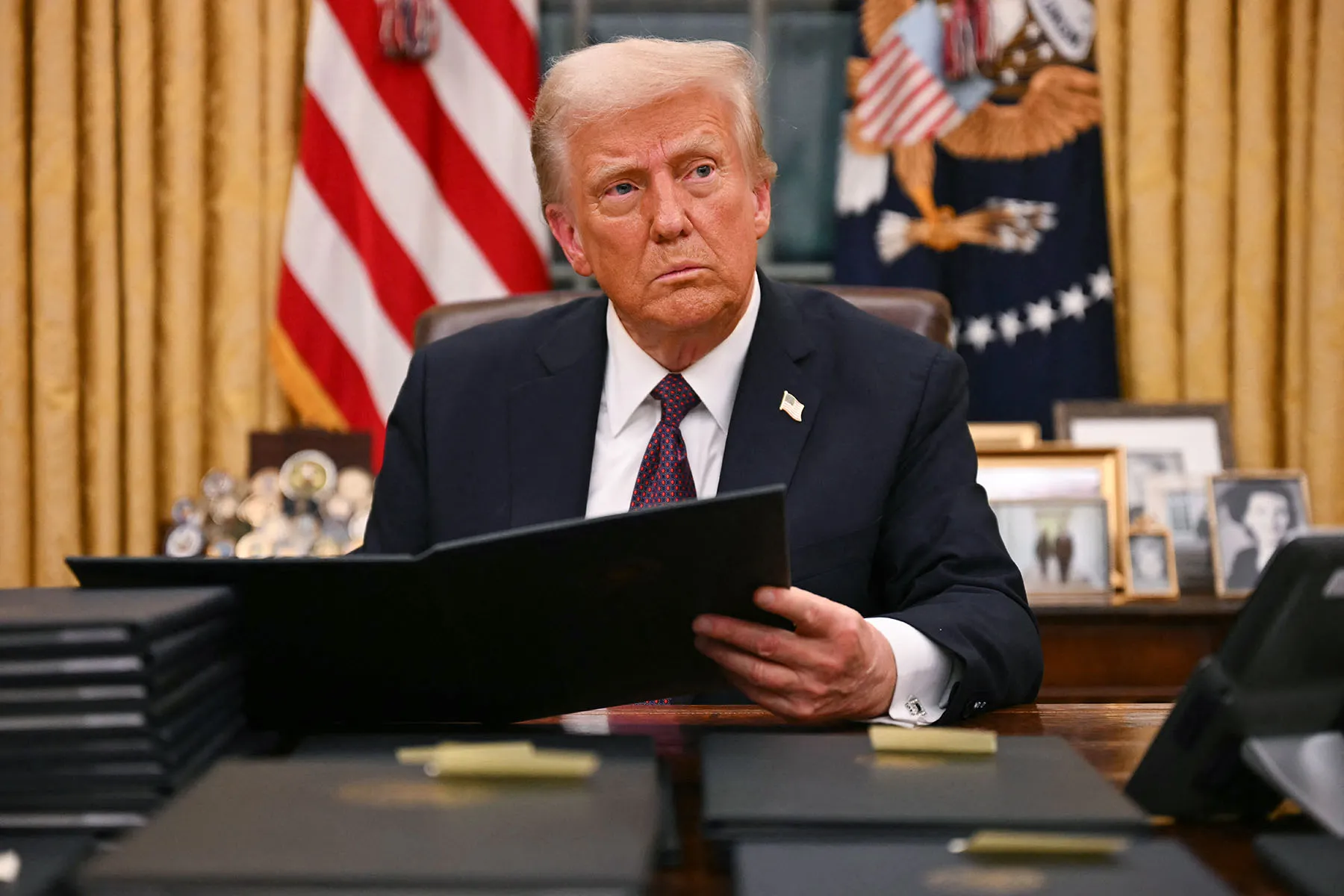
The most immediate flashpoint is President Donald Trump’s second-term
executive order on birthright citizenship, signed on January 20, 2025, titled
“Protecting the Meaning and Value of American Citizenship.” The order declares that many children born in the U.S. will no longer be treated as citizens if their parents lack permanent legal status.
Civil rights groups and several states sued almost immediately, and
multiple federal judges have issued preliminary injunctions blocking the order from taking effect while the cases move forward. One of those cases, known as
Barbara v. Trump, is now headed to the
U.S. Supreme Court, which has agreed to hear an expedited appeal in what advocates describe as a “high-stakes” challenge to birthright citizenship.
What Birthright Citizenship Means Today
Under current law and long-standing interpretation of the
14th Amendment,
anyone born in the United States and “subject to the jurisdiction thereof” is a U.S. citizen, regardless of their parents’ immigration status. This principle—often called
jus soli, or “right of the soil”—was cemented after the Civil War to ensure formerly enslaved people and their children could not be denied citizenship.
For over 100 years, both courts and the federal government have read the amendment to cover almost all babies born on U.S. territory, including those whose parents are undocumented, on temporary visas, or otherwise lack permanent status.
What Trump’s Executive Order Tries to Do
Trump’s 2025 order directly attacks that settled understanding. According to legal rights groups who have analyzed the text, the order:
-
Ends birthright citizenship for many U.S.-born children of immigrants, starting with children born after February 19, 2025.
- Specifically says
U.S.-born children will not be treated as citizens if neither parent is a U.S. citizen nor a lawful permanent resident (green card holder).- Excludes kids whose parents are here on temporary work, student, or tourist visas, as well as those with no immigration status at all.
Critics say this is effectively an attempt to
rewrite the 14th Amendment by executive action—a power presidents simply do not have.
The Supreme Court Steps In
The American Civil Liberties Union, NAACP Legal Defense Fund, Asian Law Caucus, several ACLU state affiliates, and other partners filed suit the same day the order was signed, along with lawsuits from states around the country. A federal court in the
Barbara case granted a
preliminary injunction that “protects birthright citizenship for all children born on U.S. soil” while litigation proceeds.
Now, the
Supreme Court has agreed to hear an expedited appeal of the case, setting up a major constitutional showdown over the meaning of the Citizenship Clause. ABC News reports that the justices will examine whether Trump can, by executive order,
limit citizenship only to children of U.S. citizens or lawful permanent residents, effectively excluding children of undocumented immigrants and many temporary visa holders.
Civil rights advocates are framing the case in stark terms:
- The Legal Defense Fund calls the effort an attempt to
“unilaterally rewrite the 14th Amendment” and vows to defend “the constitutional promise of citizenship for all babies born in America.”
- The Democracy Defenders Fund says
“the attack on the fundamental right of birthright citizenship is an attack on the 14th Amendment and our Constitution,” expressing confidence the Court will affirm a right that “has stood for over a century.”
Congress Joins the Fight: The Birthright Citizenship Act of 2025
While the executive order moves through the courts,
Congressional Republicans are pushing a parallel legislative effort: the
Birthright Citizenship Act of 2025.
Introduced as
S. 304 by Sen. Lindsey Graham (R–South Carolina) and
H.R. 569 by Rep. Brian Babin (R–Texas), the bill aims to
formally end automatic citizenship for many U.S.-born children whose parents are not citizens or lawful permanent residents. It currently has
2 cosponsors in the Senate and 51 in the House.What the Bill Would Do
The bill reinterprets the phrase
“subject to the jurisdiction” in the 14th Amendment to dramatically narrow who qualifies for birthright citizenship. Under the proposal, a person born in the United States would be a citizen at birth
only if at least one parent is:
- A
U.S. citizen or national, or
- A
lawful permanent resident (green card holder) residing in the U.S., or
- A
lawful permanent resident serving in the U.S. military.
Key points:
-
Children born to undocumented parents, temporary visa holders, or many other non–green-card immigrants would no longer receive U.S. citizenship at birth.- The bill explicitly says it
cannot strip citizenship from anyone born before the law’s enactment, creating a sharp dividing line between older and younger generations.
Advocates note that the bill’s core goals
mirror Trump’s executive order, aiming to restrict citizenship not just for children of undocumented parents, but also for kids whose parents are in the U.S. on temporary visas like tourist or work permits.
Who Would Be Affected—and How
Immigration and policy researchers warn that ending or sharply limiting birthright citizenship would have
sweeping social and economic consequences.The Migration Policy Institute estimates that
ending birthright citizenship for babies with two unauthorized immigrant parents would increase the existing undocumented population by 4.7 million people by 2050. That is just one scenario; broader restrictions could push that number even higher.
Analysts highlight several major risks:
-
Rise in undocumented and stateless childrenSome U.S.-born children would have
no clear claim to citizenship anywhere, especially when their parents’ countries of origin do not automatically confer citizenship by descent or when paperwork is hard to secure.
-
Creation of a “second-class” populationThese children could be
locked out of passports, driver’s licenses, higher education, formal employment, and health insurance, living in perpetual legal limbo despite being born and raised in the U.S.
-
Massive bureaucratic expansionEnding automatic birthright citizenship would require
a new system to verify parents’ status for every birth, adding layers of paperwork, cost, delays, and error. People entitled to citizenship could be wrongly denied if records are incomplete or misfiled.
Policy experts also say the U.S. would be stepping into territory where other countries have already struggled. Germany, for example, long imposed tight limits on birthright citizenship and later had to partially roll them back; researchers have used it as a case study of the social and administrative costs of restrictive systems.
The Bigger Constitutional Question
At the core of this fight is a simple yet profound legal question:
What does “subject to the jurisdiction thereof” really mean in the 14th Amendment?- For decades, courts and administrations of both parties have read it to cover nearly all children born on U.S. soil, with narrow exceptions like children of foreign diplomats.
- Trump’s order and the Birthright Citizenship Act argue that
children of noncitizens who lack permanent status are not truly “subject to the jurisdiction” in the constitutional sense, and therefore are not automatically citizens.
If the Supreme Court were to uphold that view—or if Congress passed and courts blessed the Birthright Citizenship Act—it would mark
one of the most significant changes to American citizenship law since Reconstruction.What This Means Going Forward
For now,
birthright citizenship remains in force. The preliminary injunction in the
Barbara case keeps the status quo in place while litigation proceeds, and no new law has yet passed Congress.
But the stakes are enormous:
- The Supreme Court’s eventual ruling could
redefine who is American at birth.
- Congress’s legislative push signals
long-term political momentum to narrow citizenship, even if the current bill stalls.
- Millions of families—especially those with mixed or uncertain immigration status—are now watching closely, unsure what rules might apply to children born in the coming years.
If the Court reaffirms existing precedent, it will cement the 14th Amendment’s broad promise of birthright citizenship for another generation. If it sides with the administration, it could open the door to a
tiered system of citizenship, where kids born in the same hospital on the same day have radically different legal futures based solely on their parents’ papers.
Either way, the debate over birthright citizenship has moved from constitutional theory to urgent reality—and
Sources
1. Birthright Citizenship Act of 2025: Bill Summary
2. Know Your Rights: Trump's Birthright Citizenship Executive Order
3. Supreme Court to Hear High-Stakes Birthright Citizenship Challenge
4. Supreme Court to Hear High-Stakes Birthright Citizenship Challenge
5. SCOTUS takes up Trump birthright citizenship case - ABC News
6. Protecting The Meaning And Value Of American Citizenship