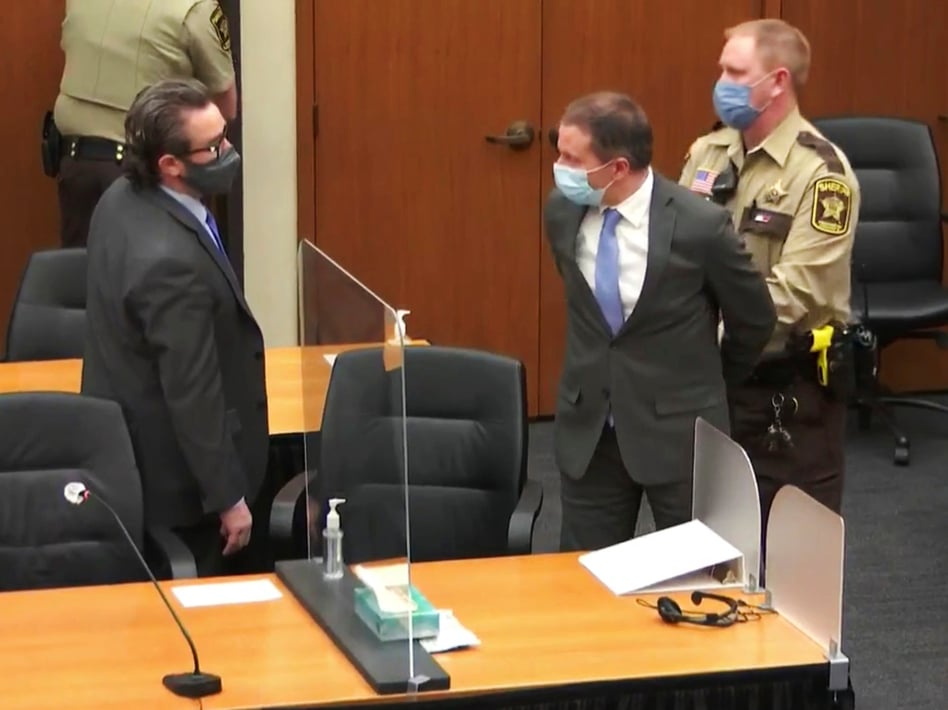
Former Minneapolis police officer Derek Chauvin is back in court — on paper, at least — with a fresh push to overturn his state murder conviction in the killing of George Floyd, a case that ignited one of the largest protest movements in modern U.S. history.
What’s New in the Derek Chauvin Case
In late November, Chauvin’s legal team quietly filed a
new petition for postconviction relief in Hennepin County District Court, asking a judge to
vacate his conviction and grant either a
new trial or an
evidentiary hearing.
The filing argues that his 2021 conviction was tainted by:
-
Faulty or misleading medical testimony about how George Floyd died
-
Misrepresented Minneapolis Police Department training and policies, especially on the controversial knee-to-neck restraint
-
Incorrect or misleading jury instructions on key points of law
The petition is now
under advisement by Judge Paul Scoggin, with the
Minnesota Attorney General’s Office due to respond by Jan. 4, 2026.
Inside Chauvin’s New Legal Arguments
1. Attack on Medical Evidence
At trial, four medical experts testified that Floyd died from
asphyxia — essentially a lack of oxygen — caused by Chauvin’s restraint, relying heavily on extensive video from the scene.
Chauvin’s new filing claims:
- Those experts relied too much on
video evidence and not enough on
medical findings from the autopsy.
- Their methods are allegedly
“not generally accepted” in the scientific community.
- Video, by itself, is “circumstantial” and “doesn’t shed any light on the events that took place inside Floyd’s body,” according to the petition.
To bolster this, Chauvin has reportedly retained physicians with
The Forensic Panel, a group that markets itself as using peer review to scrutinize forensic assessments. They are expected to testify that the original trial experts used
flawed methodology.
The petition also leans on themes from a conservative documentary,
The Fall of Minneapolis, and a related book,
They’re Lying: The Media, the Left, and the Death of George Floyd, both of which aggressively question the original medical conclusions and trial narrative.
2. Dispute Over Police Training and the Knee Restraint
A central part of the original trial was whether Chauvin’s
knee-on-neck restraint violated Minneapolis Police Department (MPD) policy.
At trial, three MPD leaders — then–Chief Medaria Arradondo, Inspector Katie Blackwell, and Lt. Johnny Mercil — testified that Chauvin’s actions were
not consistent with MPD training and policies.
Chauvin’s new petition counters that:
-
Dozens of current and former officers have now signed sworn affidavits saying the knee-to-neck tactic
was trained and consistent with MPD policy.
- Police1 reports
57 officers signed affidavits.
- Fox News cites
34 officers.
- The filing accuses those MPD witnesses of giving
false or misleading testimony, and alleges the state made “no attempt” to correct it.
In other words, Chauvin is arguing that the jury was misled into believing he acted far outside department norms, when he now claims he was using a tactic he was trained to use.
3. Claims of Faulty Jury Instructions and Due Process Violations
Chauvin’s lawyers also argue that:
- The
jury instructions misstated the law on key elements of the charges, including the standards for causing Floyd’s death.
- Combined with alleged misconduct and questionable testimony, this
violated Chauvin’s due process rights and made the trial fundamentally unfair.
The new petition echoes long-standing defense arguments that the
intense public pressure, global protests, and media coverage around Floyd’s death made it impossible to have a truly neutral process.
How This Fits Into Chauvin’s Long Appeal Fight
This is
not Chauvin’s first attempt to unwind his conviction.
- In
2021, he was convicted in Minnesota state court of
second-degree unintentional murder, third-degree murder, and second-degree manslaughter after a 14-day trial.
- Judge Peter Cahill sentenced him to
22½ years in prison, above guideline recommendations.
- In
federal court, Chauvin pleaded guilty in December 2021 to
violating the civil rights of George Floyd and a Black Minneapolis teenager in 2017.
- He received a
20- or 21-year federal sentence (reports vary slightly in phrasing) to run
concurrently with his state time.
He has already:
- Lost a
direct appeal of his state conviction; a request for a new trial was denied in 2023.
- Filed a
previous postconviction petition in 2024, focused on claims including a tumor discovered during Floyd’s autopsy and alleged pressure on the medical examiner.
- Judge Scoggin dismissed that petition in April 2025 but noted Chauvin could file a new one — which brings us to this latest round.
Depending on the source and which sentence is used to calculate, Chauvin’s
projected release ranges from
2035 to 2038, assuming he serves most of his federal time.
He is currently held at
FCI Big Spring, a low-security federal prison in Texas, where he
survived a stabbing attack by another inmate in 2023.
How Officials Are Responding
So far, public reaction from authorities has been brief — and blunt.
- The
Minnesota Attorney General’s Office, which led the prosecution, has declined detailed comment, saying it will respond in court by the January deadline.
- The
Hennepin County Attorney’s Office, which supported the AG’s team at trial, was more direct. County Attorney
Mary Moriarty told Police1: “
Chauvin is where Chauvin belongs.”
No court dates have yet been set for oral argument on the new petition; for now, it is in the judge’s hands pending the state’s written response.
Why This Matters Beyond One Man’s Case
Even five years after Floyd’s death, any legal development involving Derek Chauvin is about more than a single defendant.
1. The Legacy of the George Floyd Case
The video of Chauvin kneeling on Floyd’s neck for about
9½ minutes as Floyd repeatedly said he couldn’t breathe triggered
global protests, demands to “defund the police,” and sweeping debates on
racism, policing, and criminal justice.
Chauvin’s conviction was widely seen by reform advocates as a
rare example of accountability for a police officer accused of excessive force — and a symbolic marker of a shifting public mood around police violence.
A successful challenge to that conviction, even a partial one, would:
- Reopen deeply emotional public debates.
- Be seized on by activists on
both sides — some arguing it proves the trial was a “show trial,” others warning it would be a step back for police accountability.
2. A Fight Over What Counts as “Science” and “Training”
Chauvin’s latest petition zeroes in on
expert testimony and institutional credibility:
- On the medical side, it questions
how courts should treat video evidence versus autopsy findings when determining cause of death.
- On the policing side, it raises a thorny question:
If a controversial tactic was widely taught, does that make it acceptable — or does it indict the entire training system?If the court allows a full evidentiary hearing, we could see:
-
Duelling medical experts revisit the question of exactly how George Floyd died.
-
Internal MPD training materials and officer affidavits scrutinized more closely than ever before.
- Fresh national headlines about
what officers are actually taught versus what departments say publicly.
What to Watch Next
Over the coming months, a few key milestones will determine where this story goes:
-
State response deadline (Jan. 4, 2026): The Minnesota Attorney General’s Office will lay out its counter-arguments, likely stressing that most of these issues have already been litigated and rejected.
-
Judge Scoggin’s decision: He can
- Dismiss the petition outright,
- Order an
evidentiary hearing to take new testimony, or
- In a far less likely move, grant a
new trial.
-
Potential federal implications: While this petition targets Chauvin’s
state conviction, any serious doubts it raises about fact
Sources
1. Derek Chauvin files for new trial in George Floyd death - Police1
2. Convicted ex-cop Derek Chauvin seeks new trial in George Floyd ...
3. Chauvin files for new trial over conviction in George Floyd's murder
4. Derek Chauvin wants new trial in George Floyd's death, says ...
5. Derek Chauvin, officer convicted of George Floyd's murder, wants ...
6. Derek Chauvin seeks to overturn George Floyd murder conviction ...
7. Former Minneapolis Police Officer Derek Chauvin Pleads Guilty in ...