The name Dijon has been popping up in very different kinds of headlines lately – from a dramatic prison break to a mayor’s showdown with the far right, and even a striking archaeological discovery under a former convent. Together, they paint a picture of a city where today’s political tensions and deep history are uncomfortably sharing the stage.
A Real-Life Escape Movie: The Dijon Prison Break
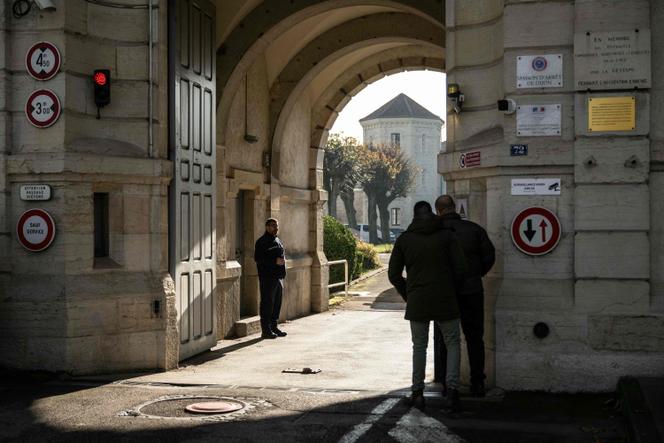
Dijon was thrust into the national spotlight after two inmates pulled off an old‑school escape from the city’s 19th‑century prison.
According to reports from AFP and French media, the two men – a
32‑year‑old accused of domestic violence and a
19‑year‑old suspected of attempted murder –
sawed through the bars of their cell, then climbed down the prison wall using a rope made from
tied-together bed sheets. Guards discovered the escape at dawn.
French police later
caught one of the two escapees the following day, arresting him south of Dijon. The younger man, suspected of attempted murder, remained on the run at the time of those reports.
What makes this story bigger than a one-off jailbreak is what it reveals about
France’s overcrowded and aging prison system:
- Dijon’s prison, built in
1853, had
311 inmates for 180 places, according to the justice ministry – far above capacity.
- Staff unions have long complained that while the state is building high-security “supermax” facilities for major organized crime figures,
older local prisons are deteriorating and overstretched.
There was even confusion in some official channels: a later administrative note referenced an “old-fashioned bed sheets incident” in Dijon but insisted that
no prisoners had escaped – highlighting how fast-moving and messy the information flow around the case became in the first 24 hours. That contradicts detailed AFP-based reporting that clearly describes the escape and subsequent manhunt.
“Foreigners Out” Event Sparks Political Clash in Dijon
At the same time, Dijon is also becoming a flashpoint in France’s ongoing battle over
immigration, identity, and extremist politics.
An extreme-right group planned a
“social event” with the slogan “Foreigners out” in the city, prompting a tough response from local officials. The
mayor of Dijon has moved to ban the gathering, arguing that it poses a threat to public order and promotes hatred.
While the details of the group are not fully spelled out in English-language coverage, this fits a broader pattern in France:
- Local authorities have increasingly relied on
prefectural and municipal powers to restrict far-right events and demonstrations seen as inciting racial hatred.
- Such bans often trigger legal challenges on free-speech grounds, putting courts in the position of balancing
public order vs. freedom of assembly.
In Dijon’s case, the explicit “Foreigners out” branding makes the political message impossible to ignore and raises the stakes for both supporters and opponents of the ban.
A City on the Front Lines of France’s Social Unrest
Dijon is not just a backdrop for isolated incidents. It has been one of the many urban stages for France’s wider wave of
social and political unrest in 2025.
During massive protests against austerity and inequality – sparked by a now-fallen Bayrou government’s deeply unpopular budget plans – demonstrators flooded cities across the country under the slogan
“bloquons tout” (“shut down everything”).
Reports from the socialist outlet
Left-Horizons describe:
-
Huge nationwide protests on September 10, 2025, coordinated largely via TikTok and social media.
- More than
80,000 police officers deployed across France to try to contain the movement.
- “Pitched battles” between heavily armed police and protesters in some cities.
Photographs cited in the article were taken by activists in
Dijon and Rouen, putting Dijon firmly on the map as one of the participating cities in this new, social‑media‑driven protest wave. The broader context: President Emmanuel Macron facing
deep popular distrust, collapsing support for centrist budgets, and rising pressure both from the radical left and the nationalist right.
The throughline with the prison story and the far-right event is clear:
overcrowded prisons, hardline rhetoric on foreigners, and mass protests against inequality are all different fronts in the same struggle over what kind of France – and what kind of city – Dijon will be in the coming years.
Meanwhile, Under a Former Convent: Ancient Dijon Resurfaces
Amid all the tension, archaeologists quietly dropped one of the most intriguing Dijon stories of the year – and it has nothing to do with politics or prisons.
At a convent site in Dijon, researchers from
INRAP (the French National Institute of Preventive Archaeological Research) uncovered a series of
unusual ancient burials:
-
13 Gallic graves dated between
450 and 25 B.C., with bodies
seated upright in circular pits and facing west.
- A
children’s necropolis from the
1st century A.D., where all the infants were under one year old, buried on their backs or sides.
- Some infants were placed in
wooden coffins, and several graves contained
coins and ceramics as grave goods.
These findings, reported by
Archaeology Magazine and based on Gizmodo’s coverage, are striking for a few reasons:
-
Seated burials are relatively rare and suggest specific ritual or social meanings within Gallic communities.
- The children’s necropolis offers a stark glimpse into
infant mortality and funerary practices in Roman-era France.
So while today’s Dijon is wrestling with overcrowded cells and political flashpoints,
archaeologists are literally unearthing layers of earlier civilizations that lived, died, and buried their dead on the same ground more than 2,000 years ago.
Why Dijon’s Name Keeps Appearing in the News
Put all of this together and Dijon becomes more than just a dot on the map of eastern France or a name associated with mustard.
Dijon right now is:
- A
symbol of France’s struggling prison system, where a 19th‑century jail can still be breached with a hacksaw and bed sheets.
- A
testbed for how far cities will go to clamp down on far-right rhetoric, including open “Foreigners out” messaging.
- A
participant in nationwide social unrest, where citizens are increasingly bypassing traditional unions and parties to mobilize via social media.
- A
window into deep time, thanks to archaeological finds that show how communities in the region handled death, ritual, and childhood millennia ago.
For observers of French politics, human rights, or European history, keeping an eye on Dijon is a way of tracking
how local stories illuminate national tensions – and how a city’s past and present can collide in surprising ways.
Sources
1. French police catch one of two escapees after Dijon prison break
2. 'Foreigners out' event: Dijon mayor to ban new extreme-right gathering
3. Mass protests continue in French cities - Left-Horizons
4. No prisoners escape from French jail in 'old-fashioned' bed sheets ...
5. Unusual Seated Burials Unearthed in France - Archaeology Magazine
6. Dijon, France, Nov 27, 2025 (AFP) - Two break out of French jail in ...
7. Dijon - Euronews.com