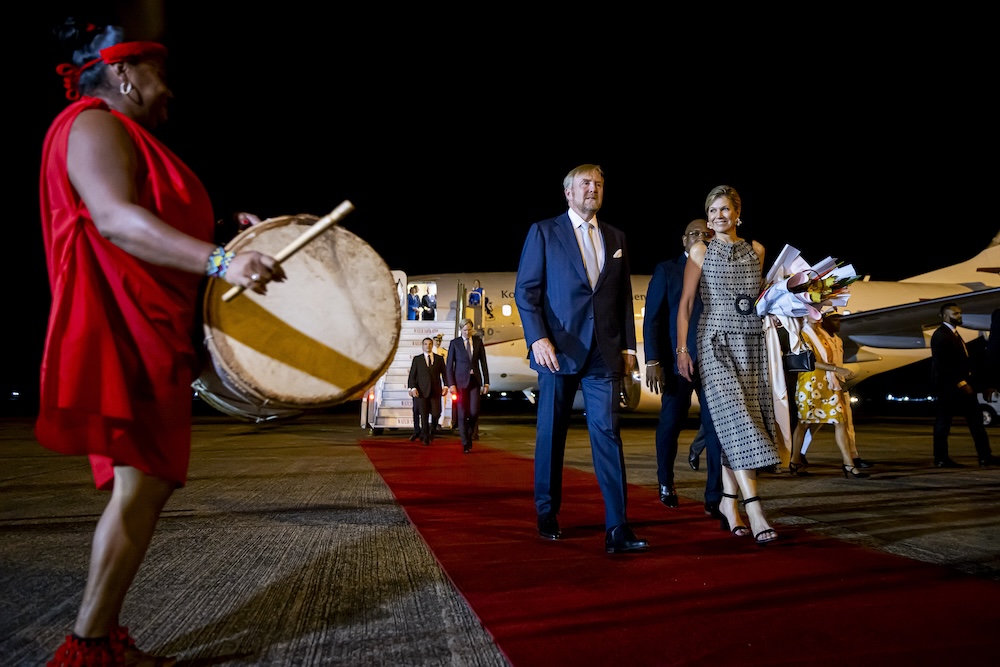
Suriname is suddenly back on the global news radar – not for a coup or a currency crash, but for a powerful mix of historical reckoning, royal diplomacy, and a fast‑rising offshore oil boom that could transform (or upend) this small South American nation.
A Historic Royal Visit After Decades of Distance
For the
first time in nearly half a century, the Dutch monarch has paid a full
state visit to Suriname, the former colony that gained independence in 1975.
King
Willem‑Alexander and Queen
Máxima travelled to Paramaribo at the invitation of President
Jennifer Geerlings‑Simons for a three‑day state visit from
1–3 December 2025. The timing is symbolic: the trip comes shortly after Suriname marked
50 years of independence (25 November 2025).
The official programme reads like a carefully choreographed reset of relations:
-
Welcome ceremony & talks at the Presidential Palace, followed by a joint statement focused on “broad cooperation” between the two countries.
- A visit to Suriname’s
High Court of Justice in Paramaribo’s UNESCO‑listed historic inner city, underlining the importance of an independent judiciary.
- Meetings with
descendants of enslaved people and Indigenous communities, explicitly framed as “a dialogue on the past and the future.”
- A
state banquet hosted by President Simons.
- Visits to
Villa Zapakara, a children’s museum focused on culture and identity, and
Stichting Buurtwerk Latour, a community centre in a densely populated Paramaribo neighbourhood.
- A
CEO roundtable on investment, talent development, and a “sustainable economy of the future” for Dutch–Surinamese business.
- A
sailing trip on the Suriname and Commewijne rivers to highlight the “spiritual, economic and ecological value” of the rivers and
mangrove forests, in a country where more than
90% of the territory is tropical rainforest and which is officially
carbon‑negative.
This is not a normal courtesy visit: it is explicitly about
slavery, reconciliation, and money.Slavery Apology Accepted – And Backed With Millions
The emotional core of the visit was a
closed‑door meeting between the king and
descendants of enslaved Africans and Indigenous peoples, who formally
accepted his apology for the Netherlands’ role in slavery.
Willem‑Alexander first issued that apology in 2023, following an earlier one by former Dutch prime minister Mark Rutte in December 2022. In 2023 the king not only apologised but also explicitly
asked for forgiveness and acknowledged that his ancestors had failed to act against slavery.
During the Paramaribo meeting:
- Representatives of descendant communities
formally accepted the apology.
- Dutch Foreign Minister
David van Weel, speaking for the king, highlighted a
€66 million fund for
social projects aimed at descendants of enslaved and Indigenous peoples.
- Suriname’s government stressed that the
€66 million is not “reparations” but a
gesture, and insisted Suriname must have a
leading role in designing and implementing the recovery programme.
This fund sits alongside a broader Dutch package created after the apologies:
- A
€200 million national fund in the Netherlands to promote awareness of slavery, finance research, and combat racism.
- Measures such as allowing descendants to
change surnames free of charge, and the rehabilitation of
Tula, who led an 1795 uprising in Curaçao, plus a new
slavery museum in Amsterdam.
The symbolism here is heavy: this is the
first Dutch royal visit to Suriname in more than 40 years, and it is centred not on trade first, but on
historical wrongs and their living consequences.
“Slavery Will Not Be Off‑Limits”
In the run‑up to and during the visit, King Willem‑Alexander has
promised not to sidestep the hardest conversations.
According to AFP reporting from Paramaribo, the king vowed that the
history of slavery would not be a taboo topic during his visit, signalling that he was prepared for “open and honest” discussions with Surinamese leaders, descendants’ groups, and Indigenous representatives.
That commitment matters because:
- Suriname’s history is deeply intertwined with Dutch
plantation slavery and
colonial violence.
- Post‑independence relations have been turbulent, marred by
coups, civil conflict and diplomatic rifts with The Hague.
- Many Surinamese activists and descendants have long argued that apologies without
material redress and power‑sharing are insufficient.
Now, the combination of an accepted apology and new funding has opened a cautious window for
resetting Dutch–Surinamese ties, even as debates over whether this is true
reparation or symbolic money are only beginning.
A Carbon‑Negative Rainforest State on the Brink of an Oil Wave
While the royal visit looks backward, another major storyline in Suriname is all about the future:
offshore oil.
Suriname is one of only
three carbon‑negative countries in the world, meaning its forests absorb more carbon than the country emits. Over 90% of its land is covered by
tropical rainforest, much of it relatively intact.
But just offshore, a very different story is unfolding.
A recent analysis by Mongabay details how
massive oil and gas discoveries off the coasts of Guyana and Suriname have triggered a regional
fossil‑fuel boom. In Suriname:
- International oil companies have made
significant discoveries in deepwater blocks, raising hopes of a Guyana‑style windfall.
- Advocates frame this as a
once‑in‑a‑generation opportunity to lift Suriname out of economic crisis and debt.
- Environmental groups warn of a looming
“perfect storm” where climate commitments, fragile marine ecosystems, and oil‑driven development collide.
The tension is clear:
| Reality today | Path ahead |
| --- | --- |
| Suriname is
carbon‑negative, heavily forested, and vocal about
deforestation and mangrove loss risks. | Offshore oil production could sharply
increase emissions, lock in fossil‑fuel dependence, and threaten coastal and marine ecosystems. |
The royal programme’s focus on
mangrove forests, river ecology, and sustainable economy was not accidental. It implicitly acknowledges that as Suriname chases oil dollars, the world is also watching whether one of its last
carbon sinks will stay intact.
Suriname in US Security and Drug‑Trafficking Narratives
Suriname’s name has also surfaced in a very different context:
US military and counter‑narcotics operations.
According to a CNN report on a controversial
US strike at sea on 2 September (in the Caribbean theatre), the alleged drug traffickers killed by the US military were planning to link up with a
larger vessel bound for Suriname. An admiral reportedly told US lawmakers that:
- Intelligence indicated the targeted boat would
“rendezvous” with a second vessel and transfer drugs that were ultimately headed to Suriname.
- The second vessel was never located, but officials argued the shipment might eventually have moved from Suriname towards markets including the US.
US drug enforcement sources, however, say
trafficking routes via Suriname are primarily European‑bound, while US‑bound routes are more concentrated in the Pacific. The episode has drawn scrutiny because:
- The boat was hit with a
“double‑tap” strike, with a second attack killing survivors – a move critics say may violate the laws of war protecting shipwrecked persons.
- The
Senate Armed Services Committee has pledged oversight of the operation.
Suriname is not directly implicated in wrongdoing here, but its
geography and ports keep pulling it into wider conversations about
transnational crime, maritime security, and US policy in the Caribbean basin.
What This All Means for Suriname’s Next Chapter
Put these threads together and Suriname looks like a country at a
major crossroads:
- It has just hosted a
historic royal visit centred on
slavery, apology and a €66 million fund that descendant communities can shape – a rare example of post‑colonial dialogue moving, however imperfectly, toward shared decision‑making.
- It remains a
rainforest‑rich, carbon‑negative state that the world needs as a climate ally – precisely as offshore
oil prospects dangle the promise of fast cash and new geopolitical leverage.
- It sits on drug‑trafficking routes and within a contested security theatre, making it part of bigger fights about
US military power, human rights and maritime law.
For Surinamese citizens, the immediate questions are intensely practical:
- Will th
Sources
1. State visit to Suriname – programme | News item
2. Descendants of Suriname's enslaved people accept king's apology
3. Surinamese slave descendants accept apology of King of the ...
4. Paramaribo, Suriname, Dec 1, 2025 (AFP) - History of slavery will be ...
5. Exclusive: Boat at center of double-tap strike controversy was ...
6. In Guyana and Suriname, offshore oil and environmental interests ...
7. Dutch royal visit brings €66m fund for Suriname slavery descendants