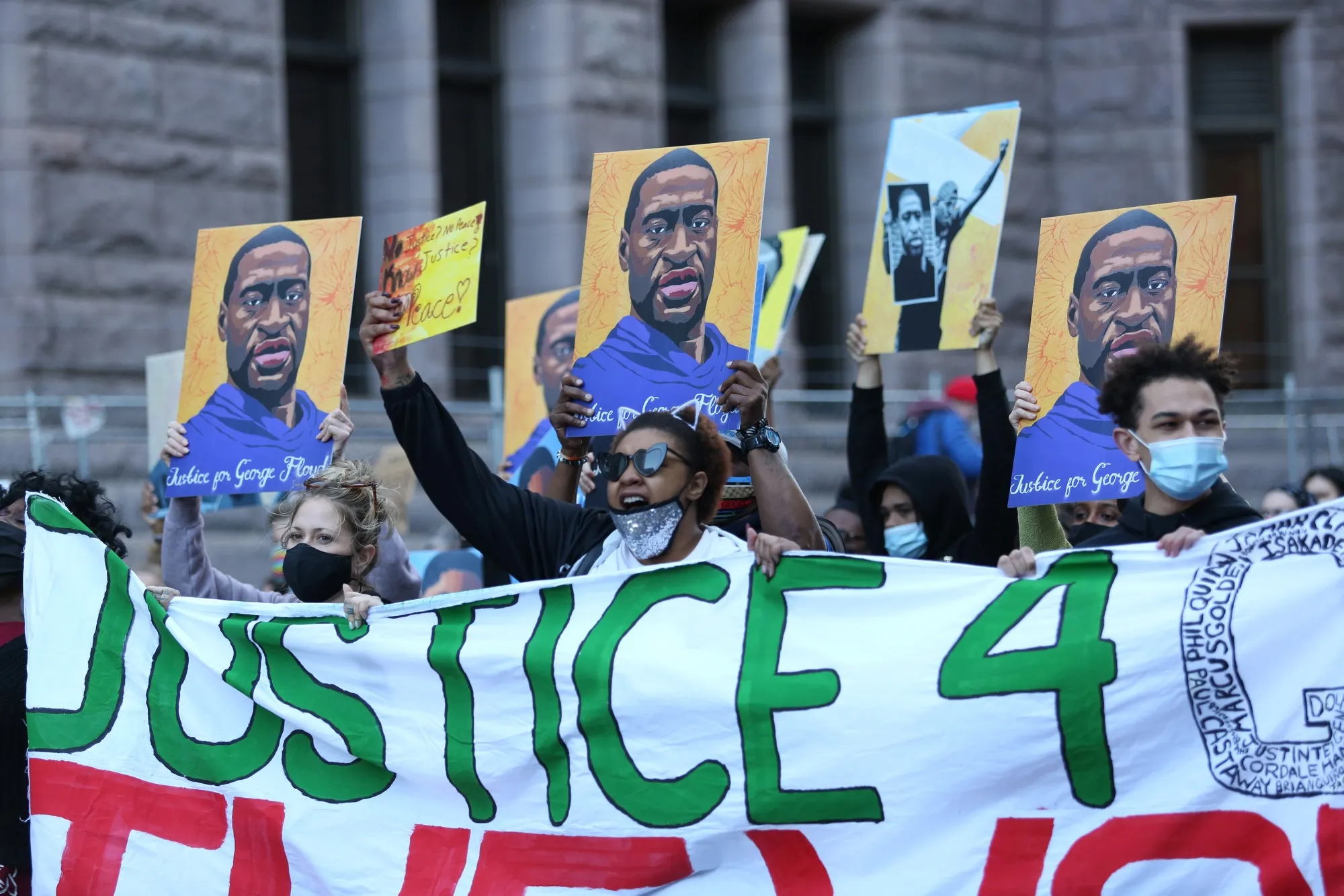
A group of former FBI agents has filed a new federal lawsuit claiming they were unlawfully fired for kneeling during a 2020 George Floyd protest in Washington, D.C., reviving one of the most politically charged images of that summer: armed law enforcement officers dropping to one knee in front of protesters.
What the New Lawsuit Claims
According to reporting summarized by
The Economic Times and Democracy Now’s daily news brief,
twelve former FBI agents say they were dismissed during
Donald Trump’s second term from the bureau after leadership retroactively punished them for their actions at a protest on
June 4, 2020 in Washington, D.C.
The complaint alleges:
- The agents were deployed to a tense George Floyd protest where demonstrators were chanting, throwing objects, and demanding officers kneel.
- The crowd included both aggressive protesters and families, and the agents say they
lacked riot gear, helmets, gas masks, and other standard crowd-control equipment.
- To defuse the situation, several agents
knelt, a gesture tied to the broader racial justice movement and to earlier “take a knee” protests against police brutality.
- The lawsuit says this decision worked: tensions eased, the crowd moved on, and violence was avoided.
The suit argues that years later, once Trump’s second administration began, FBI leadership recast that act as a
sign of political disloyalty, not crowd-control judgment.
Who Is Being Sued
The agents’ lawsuit reportedly names several high-profile Trump-era officials:
-
Kash Patel, identified in the suit as
FBI Director during Trump’s second term, is accused of pushing for their termination specifically because they knelt.
-
Pam Bondi, described as
Attorney General in the complaint, is also alleged to have been involved in or responsible for the personnel decisions targeting the kneeling agents.
- The
Justice Department and senior officials in the
Trump White House are accused of politicizing internal discipline and weaponizing it against agents perceived as insufficiently loyal to the president.
According to the complaint, Patel allegedly told senior FBI officials that the kneeling agents
“would be fired”, and that the decision
came directly from the White House.
The Political and Cultural Flashpoint: Kneeling in 2020
To understand why this lawsuit matters now, you have to go back to what
kneeling symbolized in 2020.
- The gesture had already become a lightning rod in U.S. politics after NFL quarterback
Colin Kaepernick began kneeling during the national anthem in 2016 to protest police brutality.
- After
George Floyd’s killing in May 2020, kneeling spread nationwide: protesters knelt in streets, lawmakers knelt in the Capitol, and some police officers and National Guard members knelt alongside demonstrators in attempts at solidarity or de‑escalation.
Within that context, the FBI agents claim they chose to kneel not as a political statement for or against Trump, but as a
tactical move under pressure in a volatile crowd they were ill‑equipped to control.
The lawsuit argues that what was once tolerated—or even informally encouraged in some agencies as a peacekeeping gesture—was later
reframed as ideological betrayal once Trump’s second-term team took control of the bureau.
Allegations of Politicized Law Enforcement
At the heart of the case is a broader and more explosive charge: that top Trump-era officials
politicized the FBI’s internal discipline system.
The complaint reportedly contends that:
- Internal FBI systems are being used to
purge or sideline employees seen as not fully aligned with the president’s politics.
- The kneeling incident became a
litmus test: rather than being judged on results (avoiding violence), agents were judged on whether their actions fit the Trump White House’s preferred optics.
- The firings violated civil service protections and constitutional rights, including
First Amendment protections for expression and
protections against viewpoint discrimination by the government.
If a court agrees with those arguments, it would amount to a legal finding that
law enforcement careers were destroyed not for misconduct, but for the optics of a single de‑escalation tactic on a politically charged day.
What the Lawsuit Could Mean Going Forward
This case sits at the intersection of
politics, protest, and policing—and it raises hard questions that go well beyond one protest or one agency:
-
For federal agents and officers:- Where is the line between
tactical discretion and
political symbolism?
- Can a momentary crowd-control decision years earlier be grounds for termination once political leadership changes?
-
For future administrations:- How far can political appointees go in reshaping agencies before it becomes unlawful
viewpoint-based retaliation?
- Will this case make agencies more reluctant to use symbolic gestures like kneeling, even when they might prevent violence?
-
For policing and protest culture:- Kneeling remains a deeply contested symbol; this lawsuit will test whether the government can punish its own employees for using that symbol in the field.
If the agents win, it could
strengthen protections for rank‑and‑file federal employees when their on‑the‑ground decisions intersect with hot‑button political imagery.
If they lose, it may signal that political leadership has wide latitude to define what counts as “appropriate conduct” — even when those decisions are made in split seconds during a national crisis.
What to Watch Next
Key developments to keep an eye on:
-
The government’s response: How the Justice Department (under current leadership) chooses to respond—seek dismissal, settle, or fight in court—will reveal how seriously it views the allegations of politicization.
-
Discovery and internal communications: If the case proceeds, internal emails or directives about the kneeling incident and the agents’ terminations could surface and clarify whether firing decisions were
operational or
political.
-
Impact on other law enforcement agencies: Police departments and federal agencies that faced similar kneeling controversies in 2020 will be watching closely; this case could influence
training, protest protocols, and disciplinary standards going forward.
For now, the image of
FBI agents kneeling in a D.C. street—once a fleeting moment in the chaos of 2020—has become the centerpiece of a fight over whether America’s top law enforcement institutions can be bent to the political will of the moment, or whether there are still legal lines that even powerful officials cannot cross.
Sources
1. Ex-FBI agents sue Kash Patel in major lawsuit - YouTube