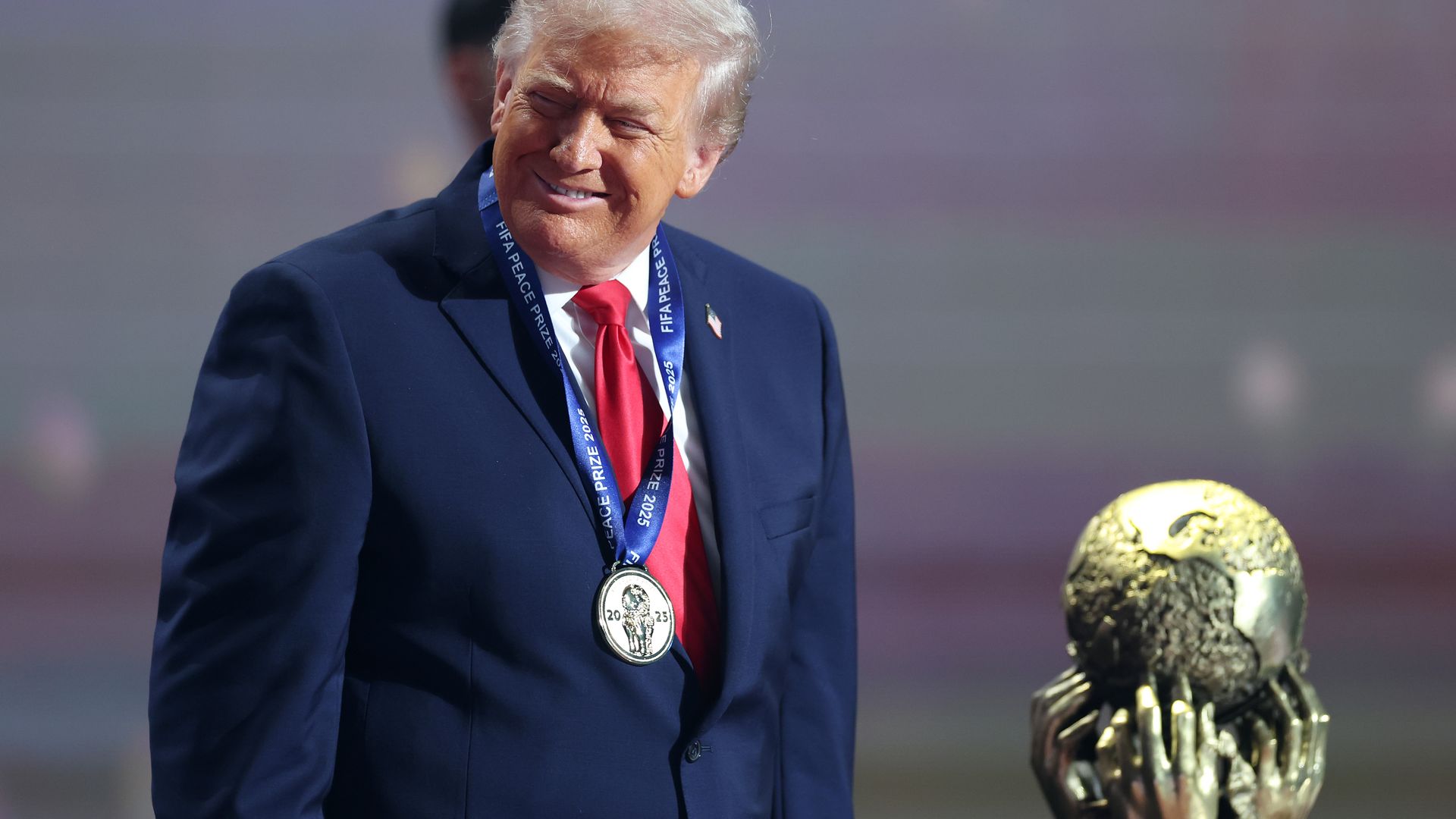
A Made‑Up Trophy, A Very Real Controversy
FIFA has plunged itself into a political storm after
awarding a brand‑new “FIFA Peace Prize” to U.S. President Donald Trump during the draw for the 2026 World Cup, in a move widely seen as both highly political and hastily improvised.
The award, presented personally by FIFA president
Gianni Infantino, praised Trump for his role in brokering a Gaza ceasefire and echoed Trump’s long‑publicized desire to win the Nobel Peace Prize. A slick video montage played before the presentation, celebrating Trump as a peacemaker on the global stage.
A Prize Invented For One Man
According to analysis on CBC News, this “FIFA Peace Prize”
did not exist until Infantino created it this year, with indications that it was effectively
designed specifically for Trump rather than emerging from any established FIFA process or committee.
Sports and politics scholar Tim Elcombe told CBC that:
- Infantino
announced the idea of a new FIFA peace award only about a month ago.
-
“No one else at FIFA knew about this” before Infantino pushed it through himself, suggesting there was
no transparent selection process, no criteria and no independent panel.
- FIFA plans to
create criteria and a process later, after already using the award on stage for Trump.
In other words, the world’s most powerful football body effectively
invented an honor on the fly, then handed it to one of the most polarizing political figures on earth—on live global television.
Infantino, Trump and a Deepening Political Alliance
The award also shines a spotlight on the
increasingly close personal relationship between Infantino and Trump. Elcombe notes that:
- Infantino has been
“very drawn” to Trump, attending many of his high‑profile events.
- FIFA has even had
offices in Trump Tower, underlining the depth of their institutional and personal ties.
- Infantino has skipped some FIFA Congress events to appear at Trump‑related events in the Middle East, according to Elcombe’s account.
This is not the first time Infantino has aligned himself with controversial power brokers. He was a
prominent defender of Qatar’s royal family during the heavily criticized 2022 World Cup, positioning himself as a kind of
self‑styled global diplomat who moves comfortably among heads of state and royal courts.
Elcombe describes this posture as
“sporting exceptionalism”—the idea that because sport claims to be neutral, it can act as a kind of super‑diplomacy above politics, even while making deeply political choices.
FIFA Claims Neutrality, Acts Politically
Infantino and FIFA have long claimed that football should be
politically neutral, but critics argue this award exposes that stance as hollow. By creating and bestowing a peace prize on a sitting U.S. president, FIFA:
-
Took an explicit position on a live geopolitical conflict, crediting Trump’s role in the Gaza ceasefire.
- Inserted itself into the broader
Nobel Peace Prize discourse, effectively validating Trump’s own campaign to be seen as a global peacemaker.
- Used the global stage of a World Cup draw to
signal alignment with a specific administration, at a time when the 2026 tournament will be hosted in the U.S., Canada and Mexico.
Elcombe argues that what’s “unique” now is
how direct FIFA has become in political conversations, even as it continues to frame itself publicly as apolitical.
Why This Moment Matters for Global Sport
The Trump peace prize moment lands at a time when
sports bodies are under growing scrutiny for their relationships with political power, from Olympic bidding to state‑backed clubs to sportswashing accusations in Saudi Arabia and Qatar.
FIFA’s move raises several big questions:
-
Who decides what counts as “peace” in global sport?
-
Should a sports federation be handing out peace prizes at all—especially to sitting politicians?
-
Where is the line between diplomacy and political endorsement?
Given Infantino’s history of defending controversial hosts and cultivating powerful political allies, many observers see the “FIFA Peace Prize” less as a noble gesture and more as
a strategic, transactional move to stay in favor with Washington ahead of the 2026 World Cup.
What To Watch Next
Going forward, key things to watch include:
- Whether FIFA follows through on its promise to
formalize criteria and a transparent process for future peace prizes—or whether the Trump award remains a one‑off anomaly.
- How
players, fans and member associations react, especially in countries critical of Trump’s foreign policy or skeptical of FIFA’s political judgment.
- Whether other leaders or groups—such as peace NGOs, former players or human‑rights organizations—publicly
question or reject the legitimacy of the award.
If FIFA tries to present future editions of this prize as neutral and institutional, critics will likely point back to this origin story:
a custom‑built trophy, rushed into existence and handed to one man, by a president who increasingly sees himself as a global power broker beyond football.
Sources
1. FIFA awards Donald Trump its inaugural 'peace prize' - YouTube