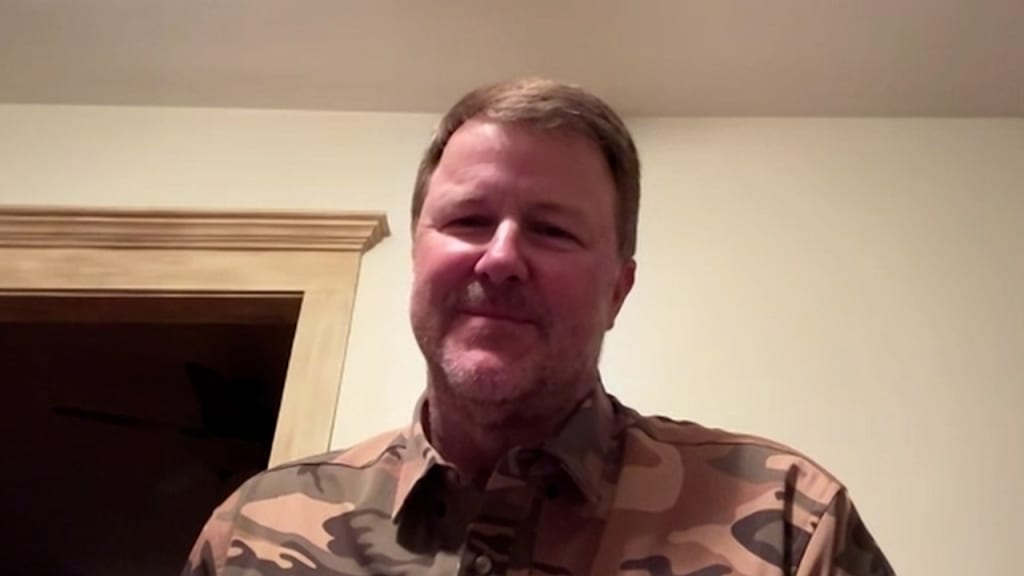
For years, Jeff Kent was the classic Hall of Fame “how is he not in yet?” debate. Now that argument is officially over: Kent has been elected to the National Baseball Hall of Fame by the Contemporary Baseball Era committee and will be inducted in July 2026.
A Power Hitter Finally Gets His Plaque
Kent, one of the most feared offensive second basemen of his era, was voted in on Dec. 7, 2025, by the
Contemporary Baseball Era Committee, a small-panel group that considers players who either fell off the writers’ ballot or were never elected by it.
He had spent the maximum 10 years on the Baseball Writers’ Association of America (BBWAA) ballot, topping out at just
46.5% in 2023 — well short of the
75% needed for election. The committee’s vote effectively overruled a decade of skepticism from writers and locked in his spot in Cooperstown.
Kent will be part of the
2026 Hall of Fame class, with the formal induction scheduled for July 2026 in Cooperstown, New York.
Why Jeff Kent’s Case Was So Controversial
On paper, Kent’s offensive résumé was always screaming “Hall of Famer”:
-
Most home runs ever by a second baseman: 351 homers while playing second base, 377 overall.
-
National League MVP in 2000 with the San Francisco Giants.
-
Five-time All-Star and
four-time Silver Slugger winner.
- Nine straight seasons of
90+ RBI from 1997–2005.
- Career line:
.290 average, 377 HR, 1,518 RBI, .856 OPS over 17 seasons.
Yet the BBWAA was never fully sold. According to coverage and long-running debates, three issues dogged his candidacy:
-
Defense: Critics viewed Kent as a below-average defender at second base.
-
The steroid era backdrop: Even without direct accusations, some voters discounted big offensive numbers from the late 1990s and early 2000s.
-
Reputation: Kent had a longstanding image as a difficult personality and “negative presence in the locker room,” which some observers believe colored perceptions of his career.
The end result: a historic offensive profile stuck in Hall of Fame limbo — until the Contemporary committee stepped in.
The Committee That Saved His Hall of Fame Case
The
Contemporary Baseball Era committee is one of the Hall’s newer voting bodies, created when the Hall revamped its veterans committees. It looks at players whose
primary contributions came from 1980 onward, along with managers, umpires, and executives from the same era.
On Dec. 7, 2025, that committee finally gave Kent the push the BBWAA never did, electing him for the
Class of 2026.
Local and national reaction was quick. NBC Sports Bay Area rolled out an “Emergency Podcast” on
Giants Talk to break down the decision, with former Giant
Rich Aurilia and others arguing that Kent’s numbers made his case undeniable — especially his MVP 2000 season, when he hit
.334 with 33 homers and 125 RBI, edging teammate Barry Bonds for the award.
Going In as a Giant
Kent played for six franchises — the Blue Jays, Mets, Indians, Giants, Astros and Dodgers — but there’s no real doubt where his Hall identity lives.
During an appearance on MLB Network cited on NBC Sports Bay Area, Kent indicated he
anticipates going into the Hall of Fame as a San Francisco Giant. That lines up with his peak years:
- With the Giants (1997–2002), his career “took off,” hitting in the heart of the lineup behind Barry Bonds.
- He piled up
689 RBI over six seasons in San Francisco and became one of the league’s most consistent run producers.
- He won his
2000 NL MVP and three straight Silver Sluggers (2000–2002) there.
For the Giants, Kent’s induction helps cement that late-’90s/early-2000s core — even as Barry Bonds himself remains outside the Hall due to the steroid-era stalemate.
Where Kent Ranks in Second Base History
Strip away the baggage, and Kent’s place among second basemen is pretty clear by the numbers:
-
All-time HR leader at second base: No other second baseman has hit as many homers while playing the position.
- One of only
two second basemen to reach 300+ homers at the position.
-
560 doubles, ranking him
30th all time in MLB history.
- A postseason résumé that includes
9 home runs and .276 average in 49 playoff games.
Modern analytics have boosted the cases of players like Chase Utley and Lou Whitaker, who brought more defensive value and on-base skills. Kent, by contrast, is a classic
bat-first, slugging infielder — but an historically elite one.
His induction forces the Hall to fully acknowledge that profile: you can be a bat-first second baseman, play average or worse defense, and still be a Hall of Famer if you hit like a middle-of-the-order star for a decade.
What This Means for Future Hall of Fame Debates
Kent’s election via the Contemporary committee sends a few clear signals for future candidates:
-
Power at premium positions matters. If you put up corner-infield or outfield power numbers while playing the middle infield, voters will eventually bend.
-
The veterans-style committees are now real power brokers. Falling short on the BBWAA ballot is no longer the end of the story — especially for controversial or “borderline on paper” candidates.
-
Reputation and era context can fade over time. The very factors that may have hurt Kent with writers (personality, steroid-era skepticism, defensive reputation) were not enough to keep him out once a smaller panel revisited his record.
As for Kent himself, his long-running frustration with the BBWAA process is likely to give way, at least public-facing, to a different story: that of a
late-blooming second baseman who turned into one of the greatest power hitters the position has ever seen — and finally got the Hall of Fame call to match.
Sources
1. Jeff Kent - Wikipedia
2. Emergency Podcast: Jeff Kent voted into Baseball Hall of Fame | Giants Talk | NBCSBA
3. Jeff Kent Stats, Age, Position, Height, Weight, Fantasy & News
4. Jeff Kent - Los Angeles Dodgers Second Baseman - ESPN
5. Jeff Kent Stats, Age, Position, Height, Weight, Fantasy & News | MLB ...
6. Jeff Kent
7. Jeff Kent elected to baseball's Hall of Fame - WTOP News