Loading...
Loading...
Loading...
Loading...
Loading...
Loading...
Loading...
Loading...
Loading...
Loading...
Loading...
Loading...
Loading...
Loading...
Loading...

The Moon tonight will appear essentially full, transitioning into a waning gibbous phase, with roughly 99–<span class="inline-flex items-center px-2 py-1 text-sm font-semibold text-blue-800 bg-blue-10...
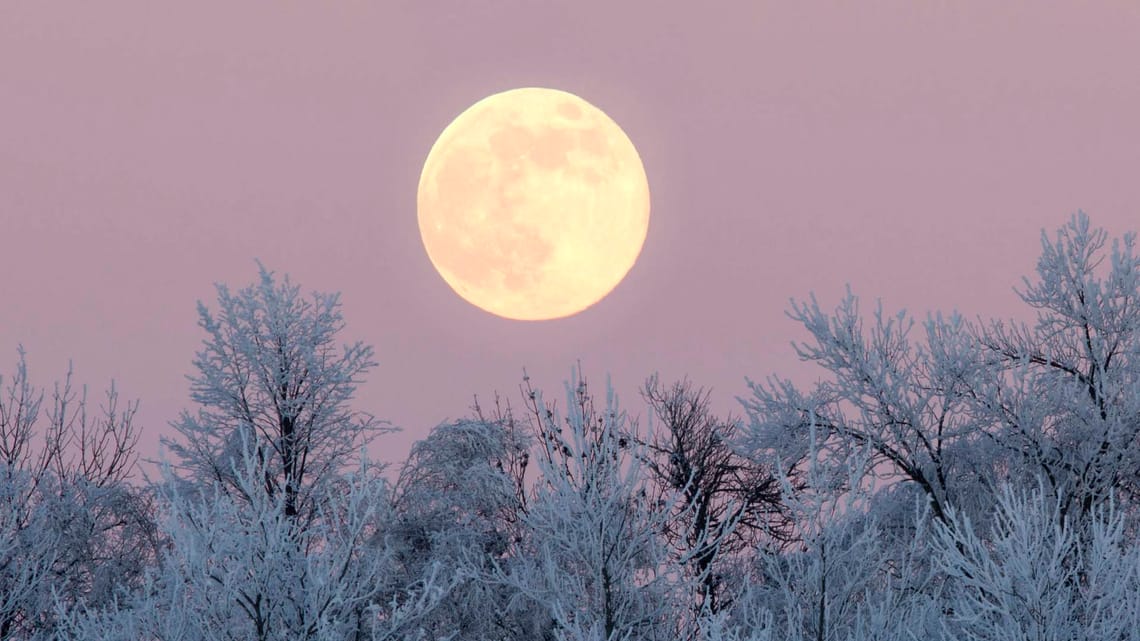
The Moon tonight will appear essentially full, transitioning into a waning gibbous phase, with roughly 99–100% of its visible disk illuminated and bright in the night sky. It will rise around sunset, remain visible all night, and set after sunrise for most locations on Earth.
The Moon is currently just past its full phase, so it is classified as a waning gibbous, meaning it is beginning the shrinking half of its monthly cycle while still appearing nearly round to the naked eye. Astronomical forecasts for early December 2025 show the lunar disk illuminated at about 99–100%, making it visually indistinguishable from a true full Moon for casual observers. This high illumination will make the Moon the dominant object in the night sky and significantly brighten the landscape.
In many Northern Hemisphere traditions, the full Moon of December is known as the “Cold Moon,” reflecting the onset of winter and long, dark nights. Contemporary lunar calendars list a bright full or near‑full Moon in early December 2025 carrying this seasonal name as it coincides with colder temperatures and longer hours of darkness in mid‑latitudes. Skywatchers can expect the Moon to ride relatively high in the sky during the long winter night for many temperate locations.
Around this date, the Moon rises close to local sunset and sets after local sunrise, giving observers an all‑night window to view it. For typical mid‑latitude locations, rise times are in the late afternoon to early evening, with set times the following morning, and the Moon’s brightness will easily overpower many fainter stars and deep‑sky objects. Clear or partly clear skies will allow the Moon to cast noticeable shadows, while hazy or thin cloud layers may create prominent halos and glows around the lunar disk.
Even though the Moon appears almost fully lit, the slight offset from exact full phase creates a subtle day–night boundary (the terminator) where shadows pick out surface detail. Lunar observing guides highlight prominent features such as large craters and lunar “seas” (maria) that are well placed under this illumination, including well‑known craters like Gassendi, Schiller, and Theophilus and regions such as Sinus Iridum. Binoculars or a small telescope will reveal these structures with enhanced contrast compared with the exact moment of full Moon, when shadows are more muted.
The nearly full Moon’s glare will significantly reduce visibility of faint stars, galaxies, and especially dim meteor activity, so deep‑sky observers may prefer to focus on the Moon itself rather than the wider sky. Aurora and Milky Way views can also appear washed out when the Moon is this bright, a factor noted in aurora‑watching and sky brightness forecasts for December 2025. For casual stargazers and photographers, however, the brilliant “Cold Moon” offers striking opportunities for moonlit landscapes, silhouettes, and wide‑angle night scenes.
1. Moon phase on Friday, December 5, 2025
2. Moon Phase on December 5, 2025: Waning Gibbous - TheSkyLive
3. Moon Phases Calendar - December 2025 - SpaceWeatherLive.com
4. December 'Cold Moon' to rise tonight. Here's when supermoon will peak
5. Moon Phase Tomorrow- December 05, 2025
6. Moonrise, Moonset, and Moon Phase in Columbus, December 2025
7. Moon Phase for Friday December 5th, 2025 - The Nine Planets