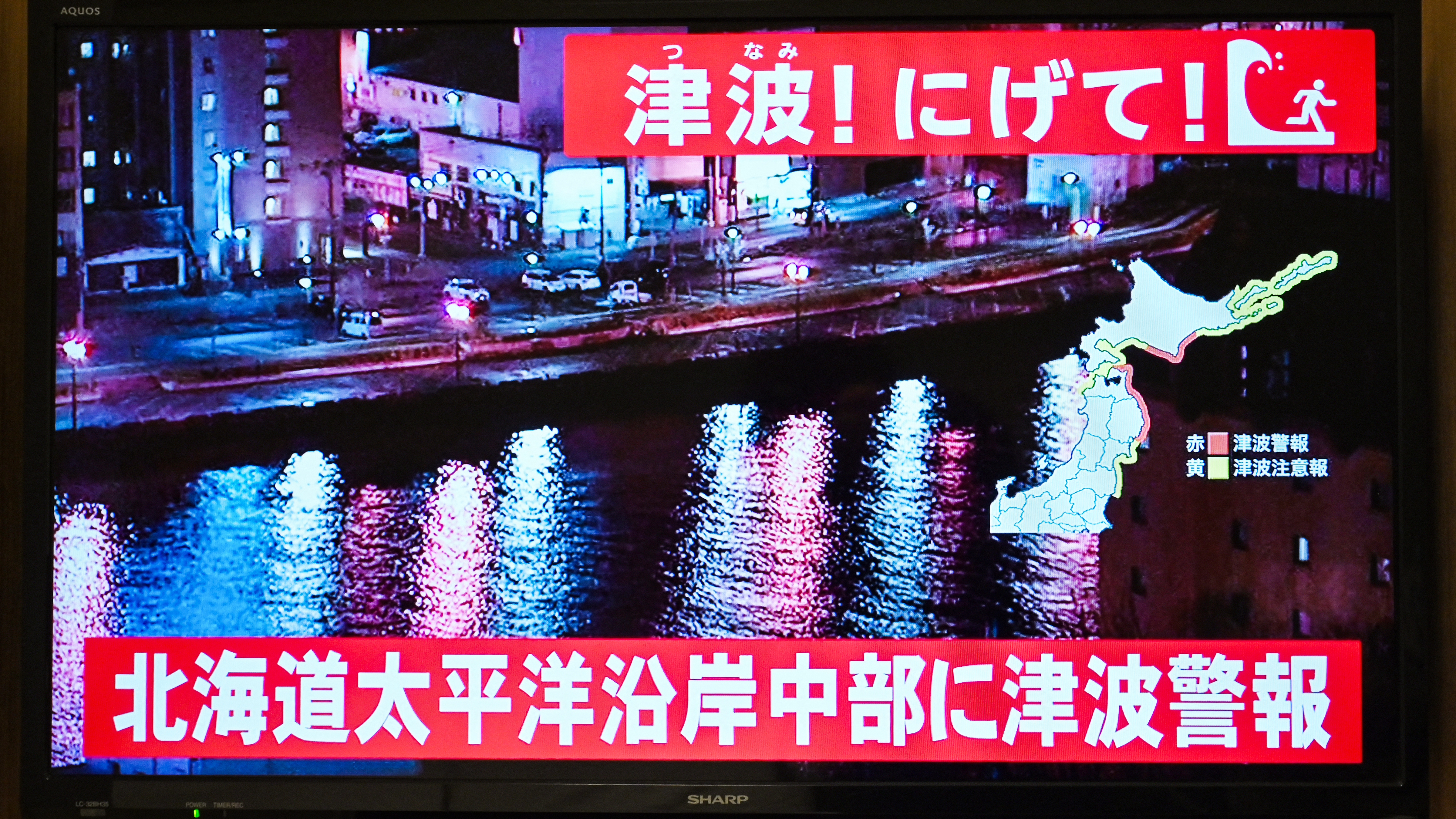
A devastating 7.6 magnitude earthquake rocked Japan's northern coast on December 8, 2025, sending shockwaves across the Pacific and forcing nearly 100,000 residents to evacuate as tsunami warnings blanketed the region. The undersea quake, centered 80 kilometers off Aomori Prefecture in the Sanriku area, unleashed waves up to 70 centimeters and left dozens injured in its wake.
The Earthquake Strikes Without Warning
The powerful tremor hit at 11:15 PM local time (23:15 JST) on December 8, with the United States Geological Survey measuring it at magnitude 7.6. The Japan Meteorological Agency recorded a slightly lower magnitude of 7.5, but both agencies confirmed the earthquake was caused by
thrust faulting at a depth of 53.1 kilometers beneath the Pacific Ocean floor. The violent shaking lasted more than 30 seconds and was felt as far away as Tokyo, with Hachinohe City experiencing the strongest intensity at "Upper 6" on the Shindo scale.
Ground acceleration measurements painted a picture of severe seismic activity. A USGS monitoring station at Noheji recorded ground acceleration of 0.3326
g, while another station in Hachinohe measured 0.472
g—both indicating severe shaking that caused widespread damage to buildings and infrastructure.
Tsunami Warnings Trigger Mass Evacuation
The earthquake's underwater location immediately triggered tsunami warnings across Japan's Pacific coast. Authorities issued alerts for waves up to
3 meters (9.8 feet) along Aomori, Iwate, and Hokkaido Prefectures, with advisories extending to Miyagi and Fukushima. The Pacific Tsunami Warning Center warned that hazardous waves could reach as far as 1,000 kilometers away, potentially affecting the coasts of Japan and Russia.
More than
90,000 residents were ordered to evacuate to shelters or higher ground as officials braced for the worst. Actual tsunami waves recorded at Kuji port in Iwate reached 50-70 centimeters, prompting continued vigilance as authorities warned that subsequent waves could be larger. The Japan Meteorological Agency lifted all tsunami advisories by 6:30 AM on December 9, but the evacuation effort represented one of the largest emergency responses in recent Japanese history.
Damage and Injuries Mount Across Northern Japan
At least
51 people were injured across the affected prefectures, with 36 injuries reported in Aomori, 11 in Hokkaido, and four in Iwate. In Hachinohe,
12 people were hurt, including hotel guests struck by falling debris. One man in Tōhoku suffered injuries when his car fell into a ground fissure created by the earthquake's violent shaking.
The physical damage extended far beyond injuries. Two fires erupted in Aomori city, while approximately
2,700 houses in Aomori Prefecture lost electricity due to power outages triggered by the quake. The New Chitose Airport's domestic terminal suffered significant structural damage, with its ceiling partially cracking and collapsing and stranding 200 passengers. A hospital in Mutsu was partially flooded after its sprinkler system was damaged, forcing the evacuation of 31 patients.
The earthquake also devastated the local fishing industry, with several oyster rafts damaged by tsunami waves.
Government Mobilizes Emergency Response
Prime Minister
Sanae Takaichi immediately activated an emergency task force to coordinate life-saving efforts and damage assessments across the affected regions. The Japanese Self-Defense Forces (JSDF) deployed 18 helicopters to conduct aerial surveys of the damage, while around 620 residents and 270 vehicles sheltered at JSDF facilities in Hachinohe.
Chief Cabinet Secretary Minoru Kihara emphasized the government's commitment to prompt communication and coordination with local authorities, prioritizing human life and rescue operations. Authorities also closely monitored nuclear plants in the region, drawing lessons from the catastrophic 2011 Tōhoku earthquake and tsunami that killed nearly
20,000 people.
Aftershock Warnings Raise Concerns
The Japan Meteorological Agency issued an unprecedented
"Hokkaido/Sanriku Offshore Earthquake Warning" following the initial quake, advising of an increased possibility of a stronger earthquake hitting the region in the coming days. The agency cautioned that aftershocks up to magnitude 7.6 could occur within the first 2-3 days, with elevated risk continuing for approximately one week.
This warning reflects the geological reality of the Sanriku region, which sits along a particularly active section of the plate boundary. The area has been the location of many powerful historical earthquakes, dating back to the devastating 869 Sanriku earthquake and most recently the 2011 Tōhoku disaster. The plate interface shows an abrupt increase in dip from about 5° to about 15° approximately 80 kilometers inland from the Japan Trench, making it a hotspot for major seismic activity.
What's Next
As Japan enters the critical first week following the earthquake, residents and authorities remain on high alert for potential aftershocks. The government continues damage assessments, while evacuation shelters remain operational for those unable to return home. The incident serves as a stark reminder of Japan's vulnerability to seismic activity and the importance of robust early warning systems and emergency preparedness protocols.
1.
2025 Sanriku Earthquake - Wikipedia2.
Civilians Scramble After 7.6 Magnitude Quake Ignites Tsunami Fears - YouTube**
Sources
1. 2025 Sanriku earthquake - Wikipedia
2. Civilians Scramble After 7.6 Magnitude Quake Ignites Tsunami Fears