Loading...
Loading...
Loading...
Loading...
Loading...
Loading...
Loading...
Loading...
Loading...
Loading...
Loading...
Loading...
Loading...
Loading...
Loading...

Tupac Shakur remains at the center of major legal and cultural developments, with a long-delayed murder case finally moving toward trial and fresh claims and books reshaping public understanding of hi...
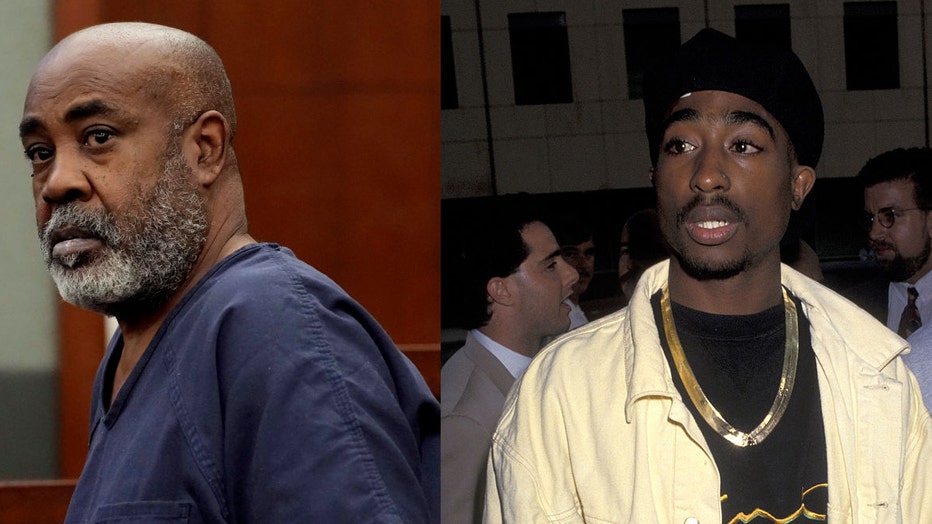
Tupac Shakur remains at the center of major legal and cultural developments, with a long-delayed murder case finally moving toward trial and fresh claims and books reshaping public understanding of his life and death.
Nearly three decades after Tupac was fatally shot in a 1996 drive‑by in Las Vegas, Duane “Keefe D” Davis is the first and only person formally charged in connection with the killing, facing a first‑degree murder charge. Davis, who has long been linked to the case through his own past statements about being in the car from which shots were fired, has pleaded not guilty and maintains his innocence.
His trial, originally scheduled for early 2026, has been delayed again, with reports indicating that the defense is still reviewing a large volume of evidence and pre‑trial issues, extending the wait for any courtroom resolution. Prosecutors are expected to rely heavily on Davis’s prior interviews and circumstantial evidence because no major new public forensic breakthroughs have been disclosed, underscoring how much of the case rests on credibility and interpretation rather than fresh physical proof.
While awaiting trial in the Shakur murder case, Davis was tried and convicted in a separate matter involving a jailhouse altercation, including counts such as battery by a prisoner and challenges to fight. He later sought a new trial in that unrelated case, but the court denied the request, and he received a prison sentence in the range of roughly 16 to 40 months, with credit for time already served.
This separate conviction does not directly involve the Shakur homicide but has kept Davis in custody and in the public eye, contributing to the intense scrutiny surrounding his upcoming murder trial. Legal observers note that the overlapping proceedings complicate his legal strategy and public image as he prepares to fight the far more serious murder charge.
Former Death Row Records CEO Marion “Suge” Knight has recently resurfaced with striking new claims about Tupac’s final days, offered in a phone interview from prison. Knight alleges that while Tupac was hospitalized after the shooting, the rapper expressed that he would rather die than face another prison term, and that his mother Afeni Shakur later instructed doctors not to continue reviving him if complications arose, framing that decision as an effort not to prolong his suffering.
Knight also repeated a long‑circulated but sensational story that some of Tupac’s close friends allegedly smoked a portion of his ashes as a symbolic gesture to keep a part of him with them, a detail that continues to fuel the mythology surrounding the rapper’s death. These claims are difficult to independently verify and add to a tangled mix of testimony, rumor, and personal memory that has always surrounded the case.
Beyond the courtroom and contested recollections, Tupac’s legacy is being revisited in new ways, including a high‑profile biography titled “Only God Can Judge Me.” The book, produced with extensive interviews and previously unseen letters, promises a more intimate portrait of Shakur, exploring his activism, contradictions, and creative process alongside re‑examinations of conspiracy theories and long‑debated details of his murder.
Coverage of the biography emphasizes that it sets Tupac’s life story against the broader backdrop of 1990s America, showing how his experiences with poverty, policing, and fame helped make him a symbol whose influence now extends far beyond hip‑hop. The renewed attention around the book, combined with the pending trial and fresh media commentary, underscores how Tupac remains a central figure in ongoing conversations about race, justice, celebrity, and violence.
For Tupac’s family, fans, and many in the music world, the Davis murder trial is seen as the closest the case has come to a formal reckoning, even as key evidence and witnesses are decades old. Legal experts note that the prosecution’s dependence on Davis’s own statements and the absence of widely known new forensic proof make the outcome uncertain, raising the possibility that the trial may resolve some questions while leaving others unanswered.
At the same time, fresh narratives—from Suge Knight’s prison phone accounts to the new biography—are reshaping how the public understands Tupac’s final days and his broader impact, ensuring that his story remains a living, evolving part of contemporary culture rather than a closed chapter from the 1990s.
1. Keefe D and the Tupac Shakur Case: What We Know as Trial ...
2. Murder of Tupac Shakur - Wikipedia
3. Suge Knight Claims Tupac Shakur Chose Death Over Returning to ...
4. Inside the New Tupac Biography | Entertainment News 10/27/2025
5. Keefe D's Trial For 2Pac Murder Charge Reportedly Delayed - iHeart